Maps

free counters

Monday, 25 April 2016

Glassdoor, more words of wisdom

"GL Accountant"

StarStarStarStarStar
Current Employee - Anonymous Employee in Coppell, TX
C
Doesn't Recommend
Negative Outlook
Disapproves of CEO
I have been working at UPS full-time
Pros
Flex Start time, weekly pay, and the ability to transfer
Cons
Work Load, poor management, unprofessional employees. Horrible OFFICE!
Advice to Management
Invest in your employees

  1. Cons
    Lots of time is spent making and generating reports for upper management to look at.
    Seems like relatively little time is spent taking action on these results.
    Management spends WAY too much time on conference calls and in meetings.
    Advice to Management
    Let management work! Greatly reduce number of conference calls and meetings.


    Cons

    They have some old rules that should really be updated. When the economy is bad they start to get a little crazy.


    Advice to Management

    Please allow management to have facial hair. This rule is so outdated it is ridiculous. Also if you're over 55 and a millionaire please retire.


    Cons

    Politics in the GCO aka NOC are horrible
    No movement


    Advice to Management

    Jim Casey thought of UPS as a family... you've strayed from that and think of employees as numbers. It starts with not giving that turkey at thanksgiving and moves to other things. Keep your talent by rewarding them and not seeing them as magnetic badge.


    Cons
    A demanding requirement whether physically or mentally. Do it now and if it's wrong you'll catch flack. They demand you move quickly, but preach safety until the numbers become in jeopardy


Wednesday, 20 April 2016

Back to Glassdoor

I've not looked at Glassdoor for a while. Here's some from this week's email

Pros

Amazing Health Insurance after 1 year, Union, raises posted, great opportunities within

Cons

Union, inexperienced supervisors, extremely hard work, no one cares about you, favoritism

Advice to Management

At least make some effort to show you care about your employees.

Pros
Offer a good profit sharing package, as well as earned vacation and good health benefits. As well, if you do your job, you will have job security.
Cons
They preach Work Life Balance but in reality they don't expect you to take them up on it nor will you make plan if you do -Bad Work Life Balance. Promotions are not based on years of experience either inside or outside company, nor sales metrics. Promotions are based on District Management Favoritism which results in discrimination and "good old boy" system. Most open positions are never posted and filled before employees even know of them; thus, they could not apply for them if they wanted to. Average base salary is below industry averages for AE jobs
Advice to Management
Bring Base pays up to national averages for BD jobs, make job position openings transparent, open to all employees and hold interviews prior to filling a job in BD.

Is Abney still CEO?

I'm out of touch.

Quickly googles.

It appears he still is.
These bar stewards nearly killed me but I'm still here.

Strange that UPS didn't come after me for calling them liars & thieves, but set the Police on me for Paedophile references.
But why wasn't there a follow-up when I didn't delete the post as requested?

Nobody has, as yet, justified why a UPS employee needed pictures of another employees children.
You can draw your own conclusions, but apparently I can't imply there's a paedophile ring within UPS. So I won't.

Promotion for Cindy Miller

This is where dis-honesty gets you in UPS.

I've emailed Jeff Berman, but haven't had a reply yet.
Still an absence of Compliance & Ethics, maybe it's because it keeps being thrown back at her.


Q&A: Cindy Miller, president of global freight forwarding at UPS

By Jeff Berman, Group News Editor
April 12, 2016
Transportation and logistics bellwether UPS recently announced that Cindy Miller was named as the company’s president of global freight forwarding. A 28-year UPS veteran, Miller was president of UPS Europe, where she oversaw all UPS operations in more than 120 countries and territories across Europe, the Middle East and Africa (EMEA).
Miller held that position going back to March 2013 and began her UPS career as a driver in Allentown, Penn. in 1988. Other positions she has held at UPS include directing key expansions in the healthcare and retail/B2C sectors, which included the company’s introduction of its UPS My Choice and UPS Access Point network offerings, as well as leading various acquisitions and the opening of new or expected facilities across Europe.
Logistics Management Group News Editor Jeff Berman recently caught up with Miller to discuss her new role at UPS and the global freight forwarding sector. A transcript of the conversation follows below. 
Logistics Management: What has the impact of the global economy been on the global freight forwarding business for UPS, given the varying global economic conditions?
Cindy Miller: What we are seeing in the global freight forwarding market, and it is not necessarily anything new, is that the market is very exciting and dynamic and can really change quite quickly. I think one thing that stays constant that we are seeing and that we are hearing from our customers is that there is always a concern about costs. And that is whether you are in Europe or Asia or elsewhere. Cost is still very, very much the forefront, but we also see that our customers are also looking at the time segment, and we are getting an awful lot of requests on solutions that can be put together that find the right mix of speed and costs, which everyone is being asked to come up with along those lines. This requires engaging across the modes of transportation as opposed to having the position or mindset that “I am just an ocean freight or air freight type of customer.”
LM: What other types of things are you seeing on that front?
Miller: The concept of near shoring is something the industry is seeing as opposed to the off shoring piece. One of the major trade lanes we are very excited about from a near shoring perspective is the U.S.-Mexico trade lane and how creative and engaged we can get in finding different solutions, where we are combining some opportunities for small package and freight that come across that trade lane a little better. We have set up what we call a center of excellence along the border in the Texas area. It is a very big focal point for us, and we are finding that the combination of assisting small package and freight in moving stuff back and forth and combining it with time and solutions that provide the best value for the cost is where we are putting a lot of our attention. And I was very pleased with me coming into this role having spent the last eight years in Europe and not really having been engaged in the U.S. freight forwarding market as much. Getting to understand things a little bit more on the U.S. side in a more granular way has given me a bit of excitement a few weeks into this job, as I see a great opportunity there.
LM: From a shipper perspective, what types of things are they looking to your group for in terms of help or problems or issues they have that they need solved?
Miller: Quite a few of them tie into technology. As customers’ supply chains become more complex, whether it is for WMS or following warehouse movements that then turn into transportation movements, or into the box and out of the box, and keeping an eye on goods in terms of what is going on when talking about speed complexity, the technology piece is a big one in regards of where shippers are pushing us to come up with new solutions and move forward. Our new Flex Global View offering is helping to enhance our customers’ ability to really keep an eye on their freight, where delays are and how to get around them. We are really pushing towards advancing technology, and we have a few things we are working on to make up for the pieces in the marketplace that are missing.
LM: How are you handling things on the regulatory front for ACE and SOLAS?
Miller:
 ACE is a little easier to have a conversation about. Our customers are looking to UPS to help guide and educate them and see what they can do better and be prepared. We are doing Webinars featuring a mix of our internal experts and share the most relevant and up to date information for our customers and also provide advance materials for them so they can ask specific questions, too. They have been well received and we have had some large audiences for these. On SOLAS, there is just a lack of clarity that we see internally at UPS in dealing with different agencies, whether it is the weighing process or certifications or violations. Customers want the most up to date information available and that is still the spot where we are not sure where it is going. We are very engaged from a public affairs perspective and within the compliance piece. When we get something more definitive, we are going to provide customers with something as definitive as we can, similar to what we are doing with ACE. We understand everyone wants to improve ocean sector safety and are in complete compliance with that and focus a lot on safety across business units. But we don’t have strong feelings as to where that lands yet, and I don’t think anyone does. We are feeling it and so are service providers, while the goal line keeps getting moved. It makes shippers uneasy in terms of not really still knowing what will need to change in terms of things like equipment and processes and by when.
LM: How do you view the current state of capacity for ocean and air in the global freight forwarding market in terms of demand, need, and availability?
Miller: Without getting into capacity-related specifics, our customers are continuing to come to us to help find the appropriate solutions, regardless of how much they are moving. That, in turn, is driving us towards increased technology. The service providers best answering those needs are the ones that will fare best regardless of capacity levels. 
LM: What are the plans for future growth for UPS Global Freight Forwarding?
Miller: The whole Europe-China rail piece is an opportunity is an untapped one and for customers facing different challenges for reducing transportation costs, or other things, when moving goods. This piece is underdeveloped at this time, and there is a tremendous amount of opportunity that UPS needs to engage and help out customers on that front. There is more to come on that and we need to guide our customers to that offering as we think it will help to alleviate a good bit of that time-cost continuum to have the right solution based on customer needs.  And, again, technology is always going to be there, so customers can have one complete system that focuses on the complete supply chain, with a seamless flow. That continues to be top of mind for UPS. We also have a strategic enterprise fund, where we invest in start-up companies from a technology perspective to see the latest and greatest that is being tested or baked in the market. 

Monday, 18 April 2016

Old hat, but......

Cindy Miller to take charge at UPS Europe

Friday, March 22nd, 2013
UPS has appointed Cindy Miller as president of its largest non-US operation, UPS Europe.
The 24-year UPS veteran who has been president of UPS UK, Ireland and Nordics, takes responsibility for all UPS operations in more than 120 countries in Europe, the Middle East and Africa.
The region accounted for almost half of the $12.1bn of international revenue generated by UPS in 2012.
Miller, 50, officially takes charge on 30th April, taking over from Jim Barber, who was appointed president of UPS International last month.
UPS said its new UPS Europe president has “extensive” experience and knowledge of the EMEA region, having served in senior executive positions in Europe since 2008.
“UPS delivered more than 30 million items during the 2012 London Olympic Games and Cindy is the leader responsible for UPS’s outstanding performance,” said Dan Brutto, the outgoing president UPS International.
“In addition, she also ensured UPS delivered innovative sustainability solutions through our technology and logistics solutions. Cindy is a well-rounded executive with a laser focus on operational excellence and superior customer service.”
Miller, a native of Tamaqua, Pennsylvania, USA, has held several key executive positions at UPS, such as president of UPS South Europe and Africa, as well as similar roles in the U.S. She began working for UPS as a package car driver and, like many UPSers, worked her way up through positions of increasing responsibility.
“UPS will continue to focus energy and resources on Europe as it plays a large role in our long-term strategy,” said Miller. “We see continued growth because we help our customers be more competitive on a global scale.”


Hmm, can't see any reference to her being in compliance & ethics. Maybe she daren't admit that now.

The words, Miller, liar, thief, bully and Cindy all spring to mind.

Yes Cindy I do know the meaning of threat as I proved before.

Your threat was an idle one.

Mine wasn't because you can t threatened to do something you've already done.

But with 4 against 1 it's hard to be able to get a word into conversation.

That's bullying and intimidation.

Is that the sound of.................

Chickens?


Come on UPS

What are you scared of?

Do I need to repost my paedophile thread?


Tuesday, 5 January 2016

Idle threat

I had a visit from the police.

They asked me to delete the post about Paul Mooney.

I've done it.


Dear UPS

Why have you not followed up your threats?
The visit by the police was on 4th January 2015.
I have just deleted the post within the last 10 minutes, 5th January 2016

What are you scared of?

Saturday, 24 January 2015

Is Abney at Davos?

Can you image Abney or Davis being bothered?


This week, 1,500 business leaders and 40 heads of state are meeting in Davos, Switzerland, for the annual World Economic Forum. They will be discussing how big business can help improve the state of the world – in their own best interests.
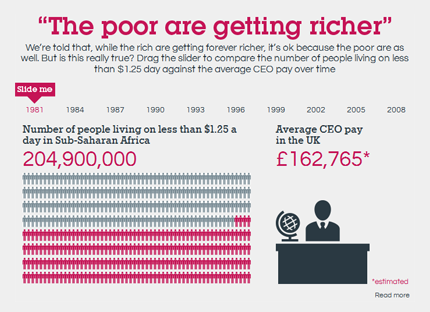
The rhetoric from Davos is so deeply engrained in society that it can be difficult to challenge the power that they hold. Our new series of interactive infographics exposes seven myths that exist to perpetuate injustice and poverty across the world - find out who is really getting richer; who the real scroungers are; and how Africa is really the one aiding us.
The world will not be saved a tiny group of the super-rich. Hope lies in challenging the power and wealth of this small elite and the orthodoxy of neoliberalism. By working with social movements around the world another world is possible.
At Global Justice Now we are campaigning for a world where resources are controlled by the many and not the few. And the first step to do this is to debunk the myth that big business is the solution to all our problems.
Best wishes,
Alex Scrivener,
Global Justice Now

Flight 1354 - Contradiction

The deadly crash of a United Parcel Service Inc. (UPS) plane that struck a hillside short of an Alabama runway yesterday is the latest for an air-cargo industry that’s experienced many more fatal wrecks than U.S. passenger carriersThe accident involving Atlanta-based UPS, the world’s largest package-delivery company, was the second with fatalities this year and fourth since 2009 for a U.S.-registered cargo hauler, according to the National Transportation Safety Board.
We have not seen that kind of number in passenger airplanes,” John Cox, president of Washington-based Safety Operating Systems and a former airline pilot, said in an interview.
The rate of fatal cargo accidents around the world was eight times higher than on passenger planes from 2002 to 2011, according to a study by the U.K. Civil Aviation Authority published in June.
The UPS plane, an Airbus SAS A300-600F, broke apart and burst into flames yesterday while approaching the airport in Birmingham, Robert Sumwalt, a member of the U.S. National Transportation Safety Board, said at a briefing. The two pilots were killed. UPS declined to name them in a joint statement with the Independent Pilots Association union.

By Alan Levin, Jennifer Surane and Thomas Black (Bloomberg)


Before boarding the last flight of his life, UPS cargo pilot Capt. Cerea Beal Jr. confided to a colleague: "These schedules over the past several years are killing me."

Just before takeoff, his co-pilot also expressed concern about fatigue.

In a conversation captured by the cockpit voice recorder, First Officer Shanda Fanning told Beal that she had just gotten a "good sleep," but she was still "so tired."

Both Beal, 58, and Fanning, 37, died last August when their plane, an Airbus A300, crashed just short of the Birmingham, Alabama, airport just before dawn.

Details of the conversations were revealed Thursday during a National Transportation Safety Board public hearing.

The board released documents around its investigation and heard testimony from UPS officials, pilots, and other experts.

Until Thursday, the issue of fatigue had received little attention in the UPS accident.

But with the release of the cockpit transcript and interview records, the crash of UPS flight 1354 is now part of one of the hottest debates in commercial aviation: pilot rest.

'One level of safety'

In January, the Federal Aviation Administration enacted new rest rules for all airline pilots. But the rule excludes cargo crew.

Cargo pilots say the FAA should have "one level of safety" for all pilots -- a sentiment expressed in the doomed cockpit -- and say government and industry should place the same value to cargo pilot's life that they give to airline pilot and passenger lives.

Cargo pilots have special rest needs, they say, because they typically fly "on the back side of the clock" -- at night -- which raises havoc with sleep rhythms and contributes to fatigue.

UPS argues that it gives pilots ample opportunity to sleep, that it has a non-punitive system for pilots who say they are too tired to fly, and that work hours have been largely negotiated with the pilots' union.

Finally, they stress that pilots share responsibility that they get adequate rest and are fit to fly.

Cockpit conversations

Even though the NTSB is months away from determining the probable cause of the accident, the rest issue erupted in full Thursday.

It was raised, in this case, by the ill-fated pilots themselves, their haunting words captured on the cockpit voice recorder.

As the plane cruised toward Birmingham, Beal noted the two-person crew would have two extra hours off-the-clock on the ground, and pointed out their rest period during a previous leg was cut short by a 30-minute ride to the hotel.

"This is where, ah, the passenger side (passenger airline pilots) ... they're gonna make out," he said.
By Mike Ahlers, CNN

Flight 1354

Anyone else spot a bit of contradiction throughout this story?
Both pilots commanding the Airbus (AIR:FP) A300 flight were killed after striking trees while descending too rapidly, crashing short of the runway. The National Transportation Safety Board declined to blame fatigue for the crash, although the co-pilot’s failure to rest properly and the physical rigors of working at night were cited as contributing factors.
Federal rules that took effect in January, governing how much rest and off-duty time pilots must receive, do not apply to the pilots at UPS (UPS) and FedEx (FDX). The freight companies argue that their schedules are radically different and that their pilots already receive more rest time between flying shifts than do passenger pilots.
UPS called the accident “a terrible aberration” and said it has changed procedures regarding stabilized approaches, automation, pilots’ decisions to go around when an approach is shaky, and altitude call-outs on descent. “This accident underscores the shared responsibility that companies and pilots have to ensure proper rest and to report to work fit for duty,” spokesman Mike Mangeot said in an e-mail.
The Independent Pilots Association, which represents 2,600 UPS pilots, sued the Federal Aviation Administration after the agency announced what pilots call the “cargo carve out,” exempting FedEx and UPS from the rest rules. A bill that has been pending in Congress for more than a year would require cargo and passenger pilots to fly under the same rest rules. Last month, the NTSB took the unusual step of removing both UPS and its pilots’ union from the Birmingham crash investigation, citing “prejudicial” statements from both sides regarding pilot fatigue as a potential issue in the crash.